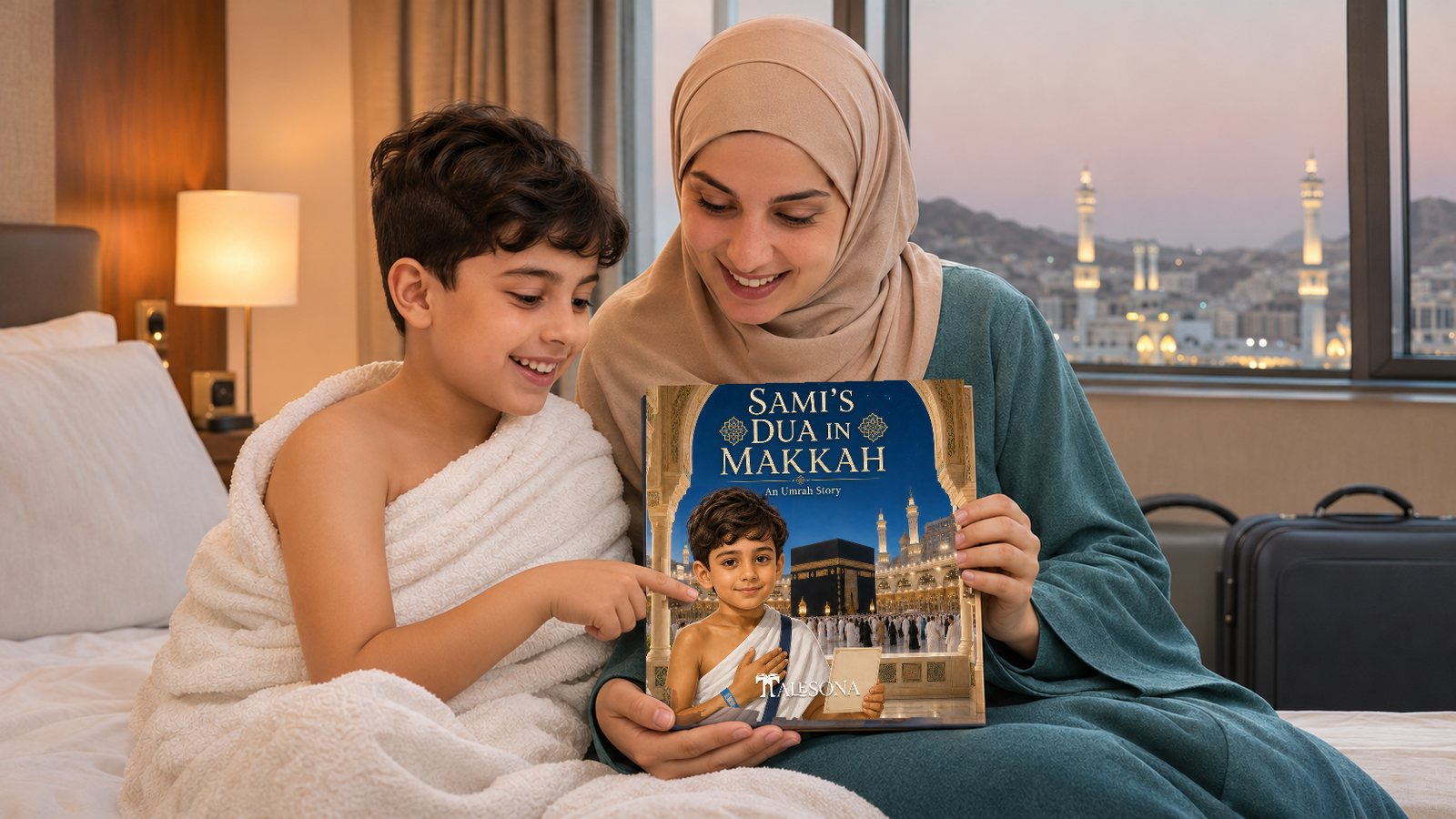
Taking children on Umrah is a gift they may remember all their lives. A little preparation makes the difference between a tired, overwhelmed child and one who understands what they are seeing. Here is how to prepare them, step by step.
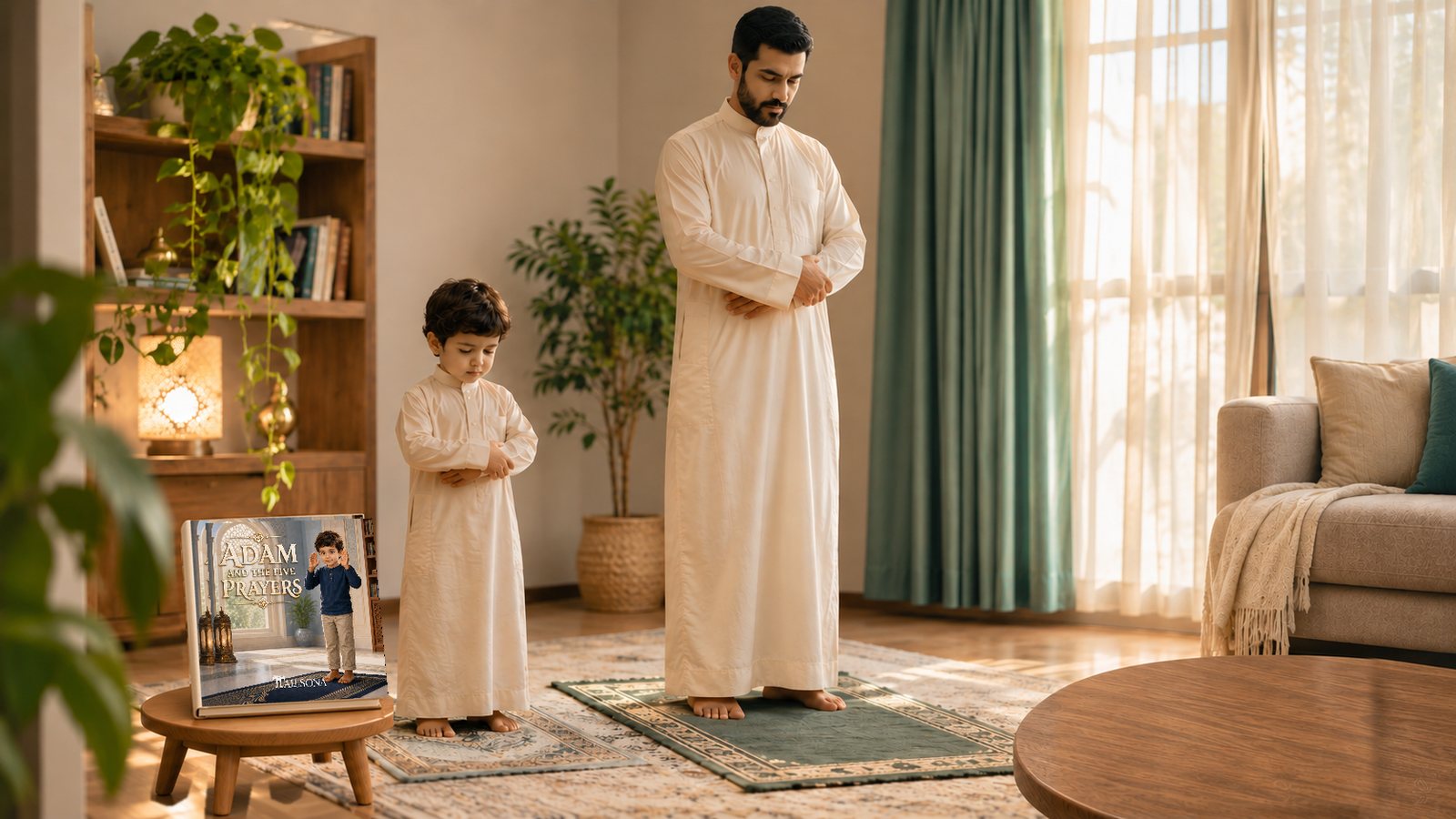
Children learn salah the way they learn most things: by watching someone they love, then copying, then owning it. This age-by-age guide shows how to teach the five daily prayers gently, from the toddler on the prayer mat to the ten-year-old who prays on time.
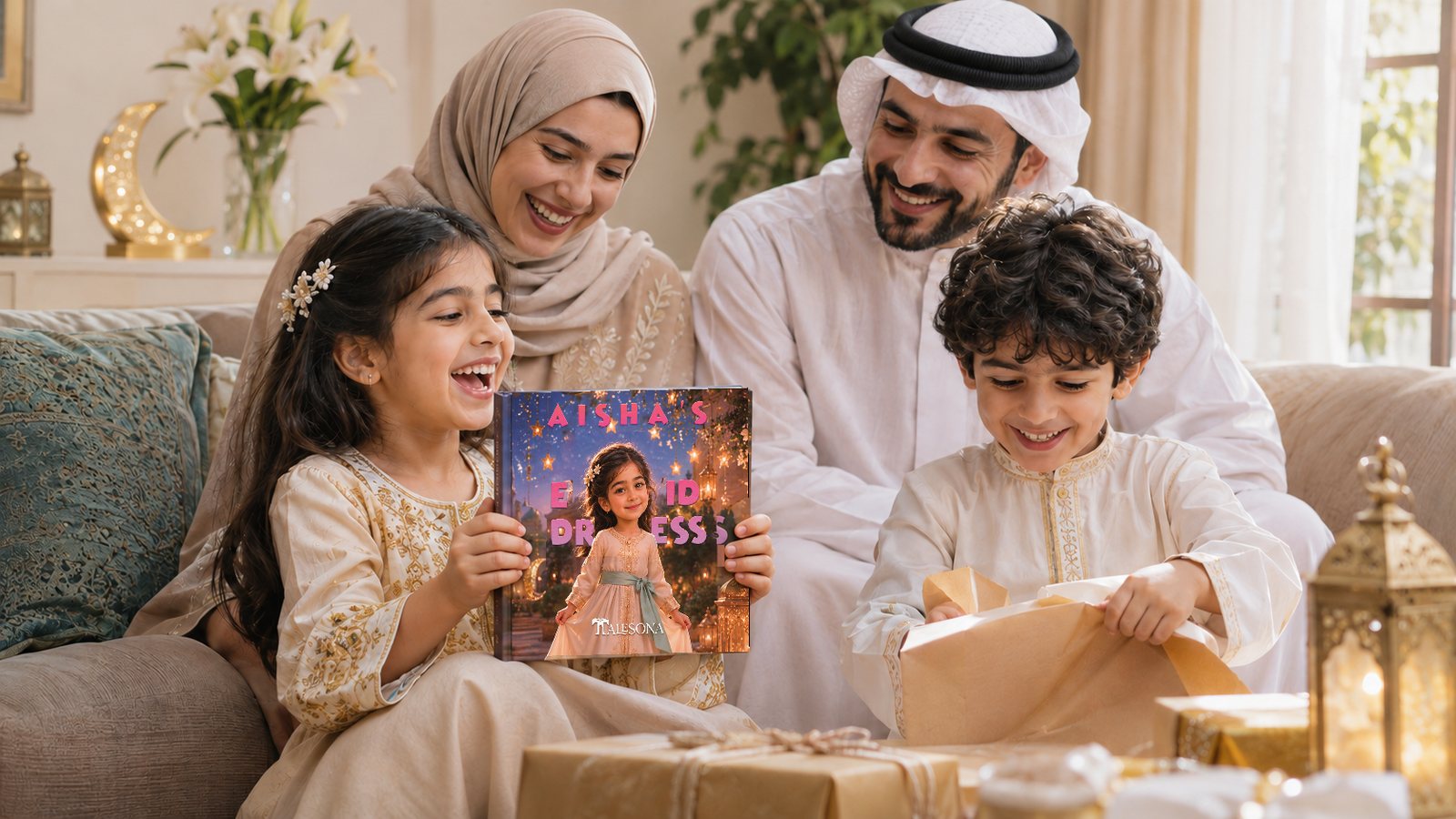
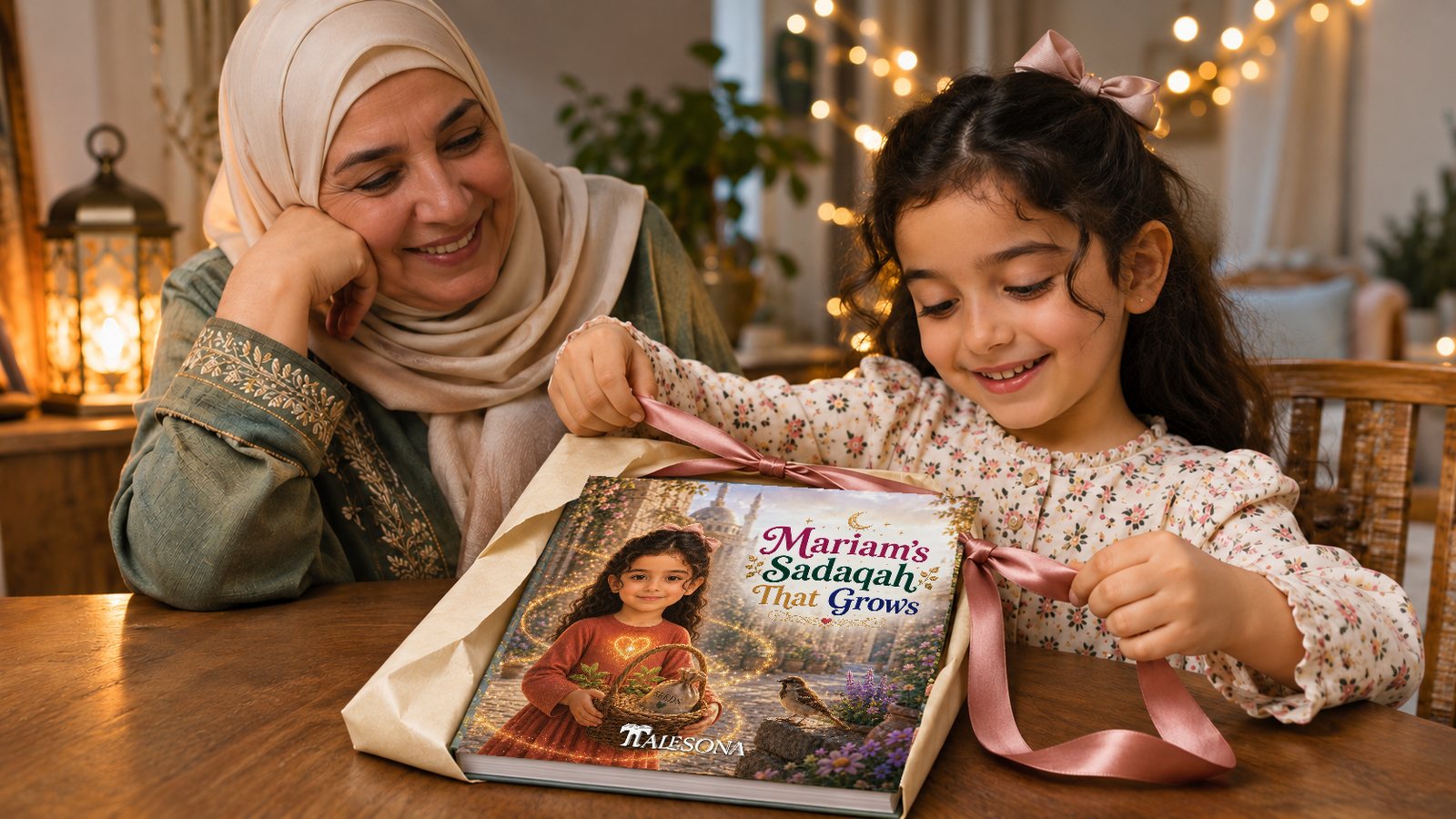
The best Eid gifts are the ones a child still reaches for weeks later. Here are thoughtful Eid gift ideas by age, from keepsakes and experiences to Islamic books and personalized stories where your child is the hero.
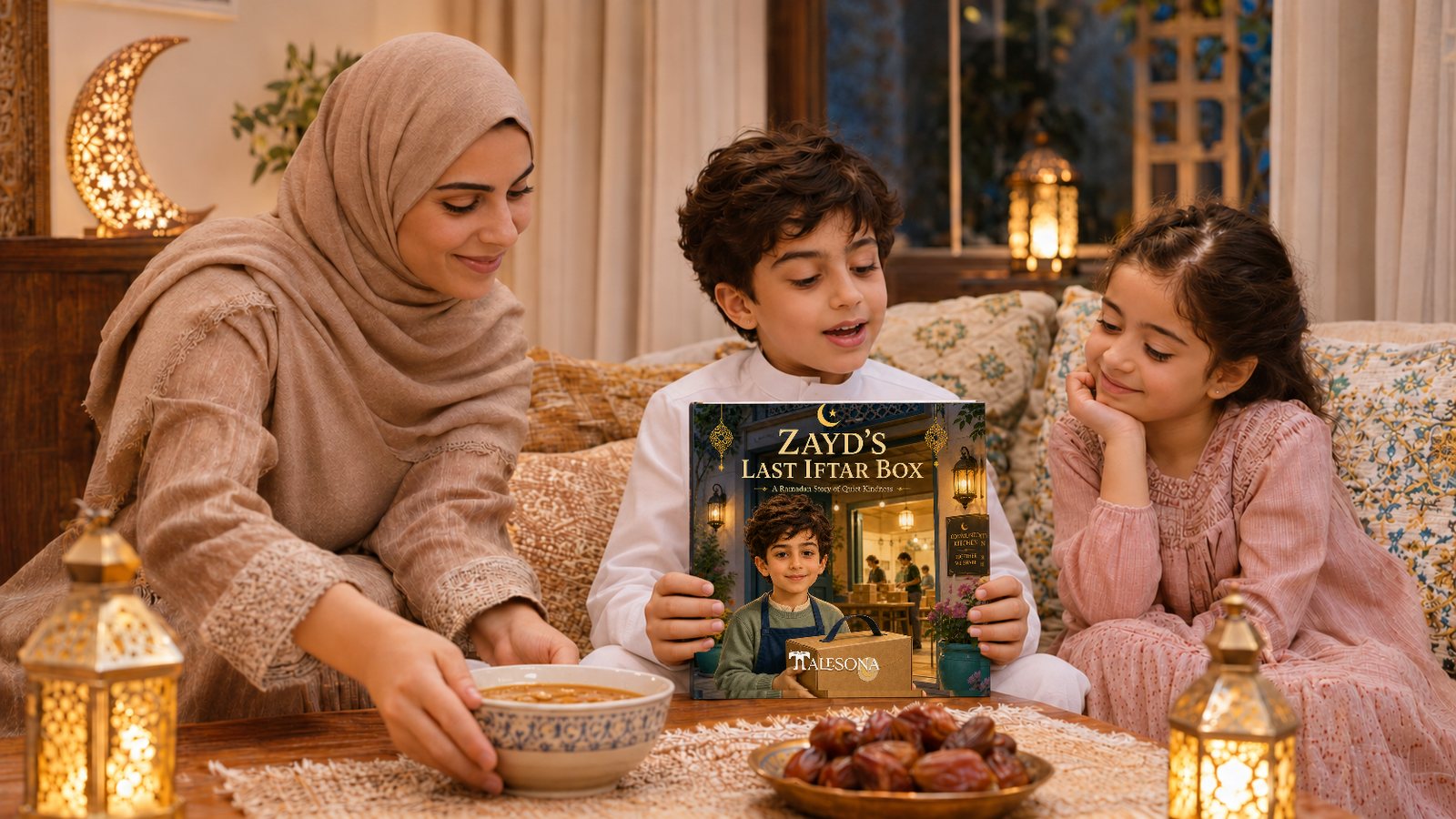
Ramadan 2027 is expected to begin around 8 February, depending on the moon sighting. For children, the month is remembered through small things repeated every day: a good-deeds board, a practice fast, a box of dates carried to a neighbour, and a story at bedtime. Here is a simple plan for each age.
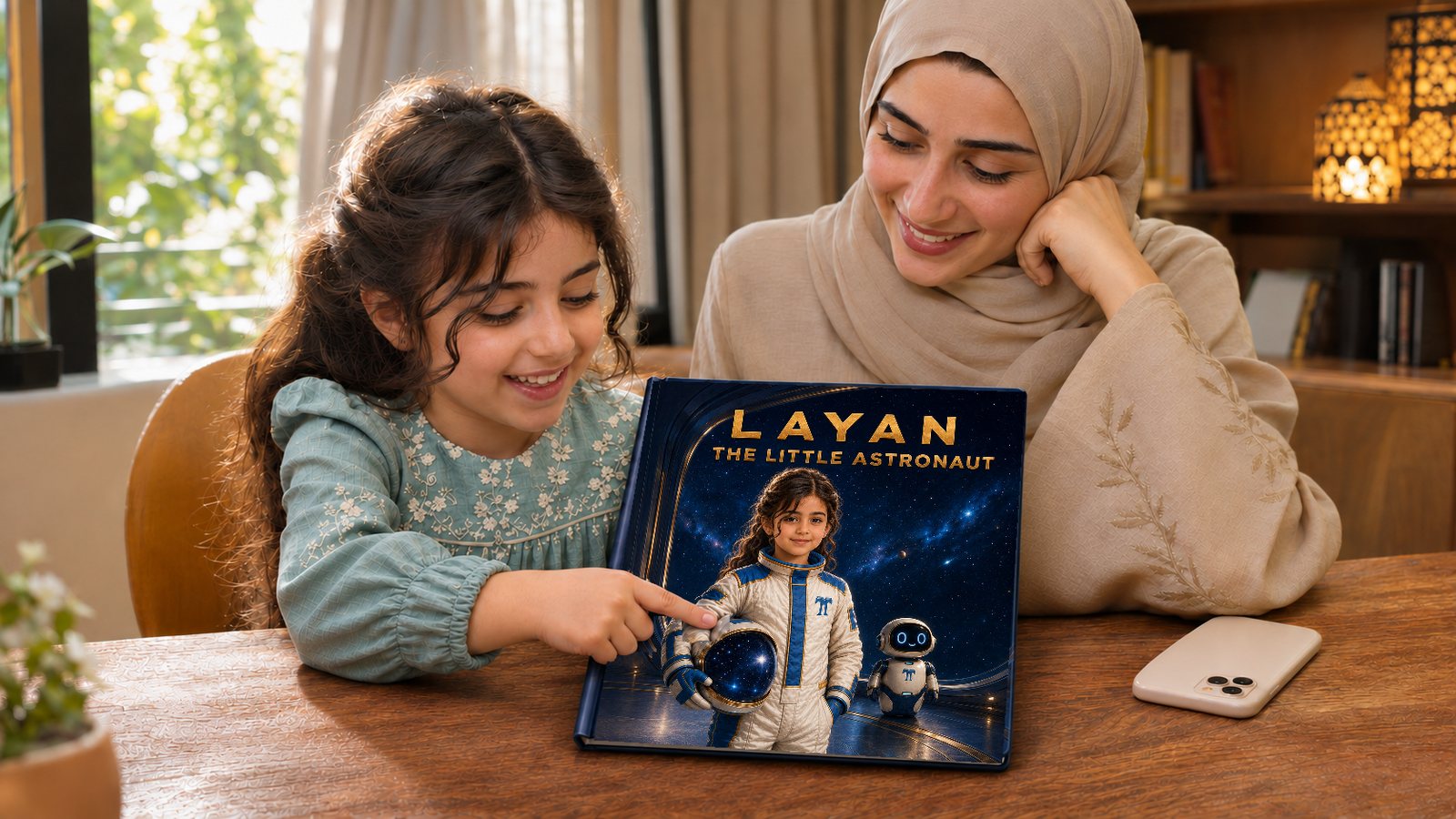
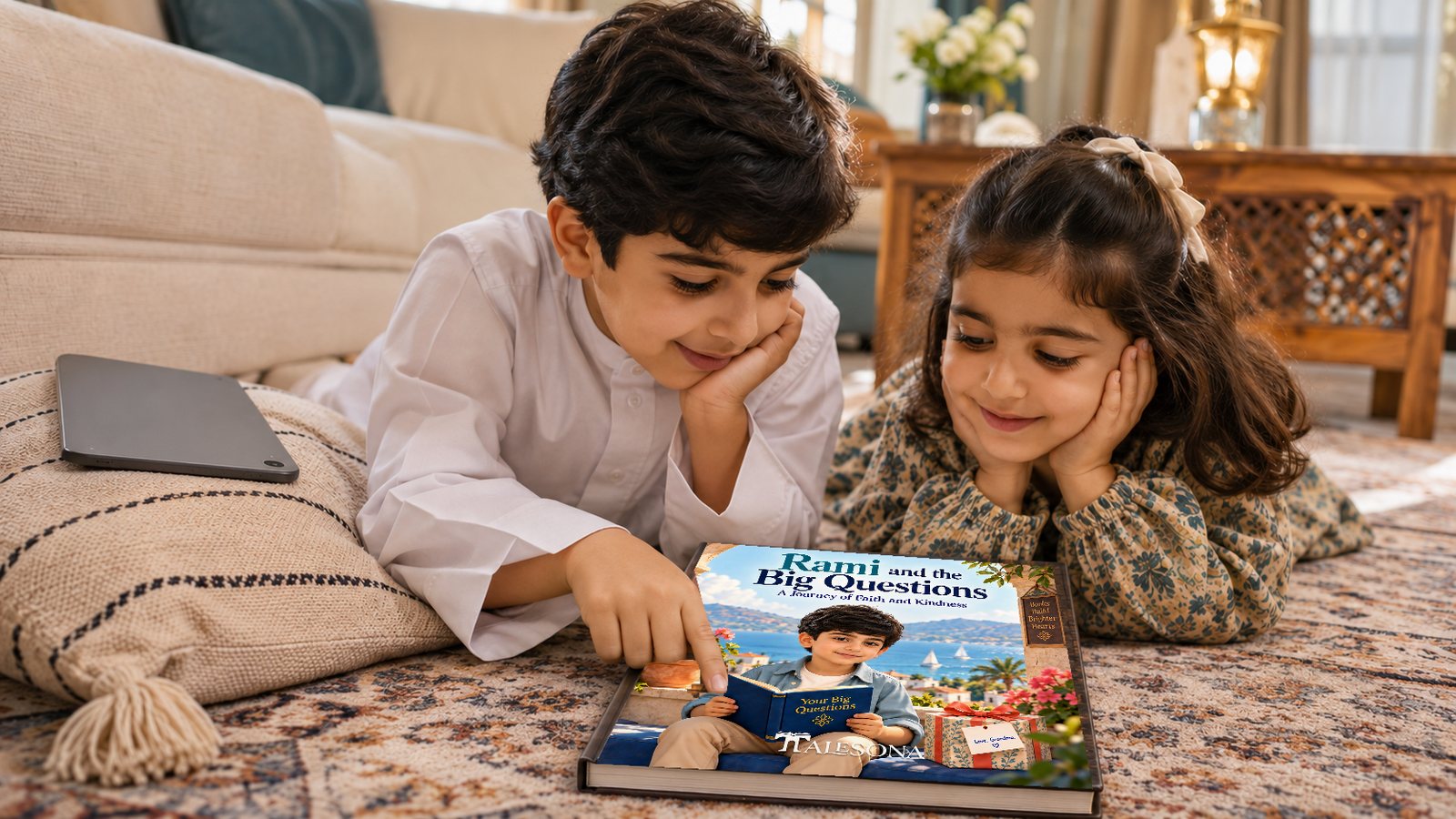
Personalized storybooks work by turning one photo and a name into a book where your child is the hero. With Talesona, you choose a story, upload one photo of your child and type their name, then see a free preview with their name on the cover and their face in the illustrations of every page,…
A meaningful gift for a child is one that says "I see you" and keeps giving after the wrapping paper is gone. A storybook with the child's name on the cover and their face in the illustrations does both: it invites a grown-up to sit down and read it with them, and as the child grows, it can become…
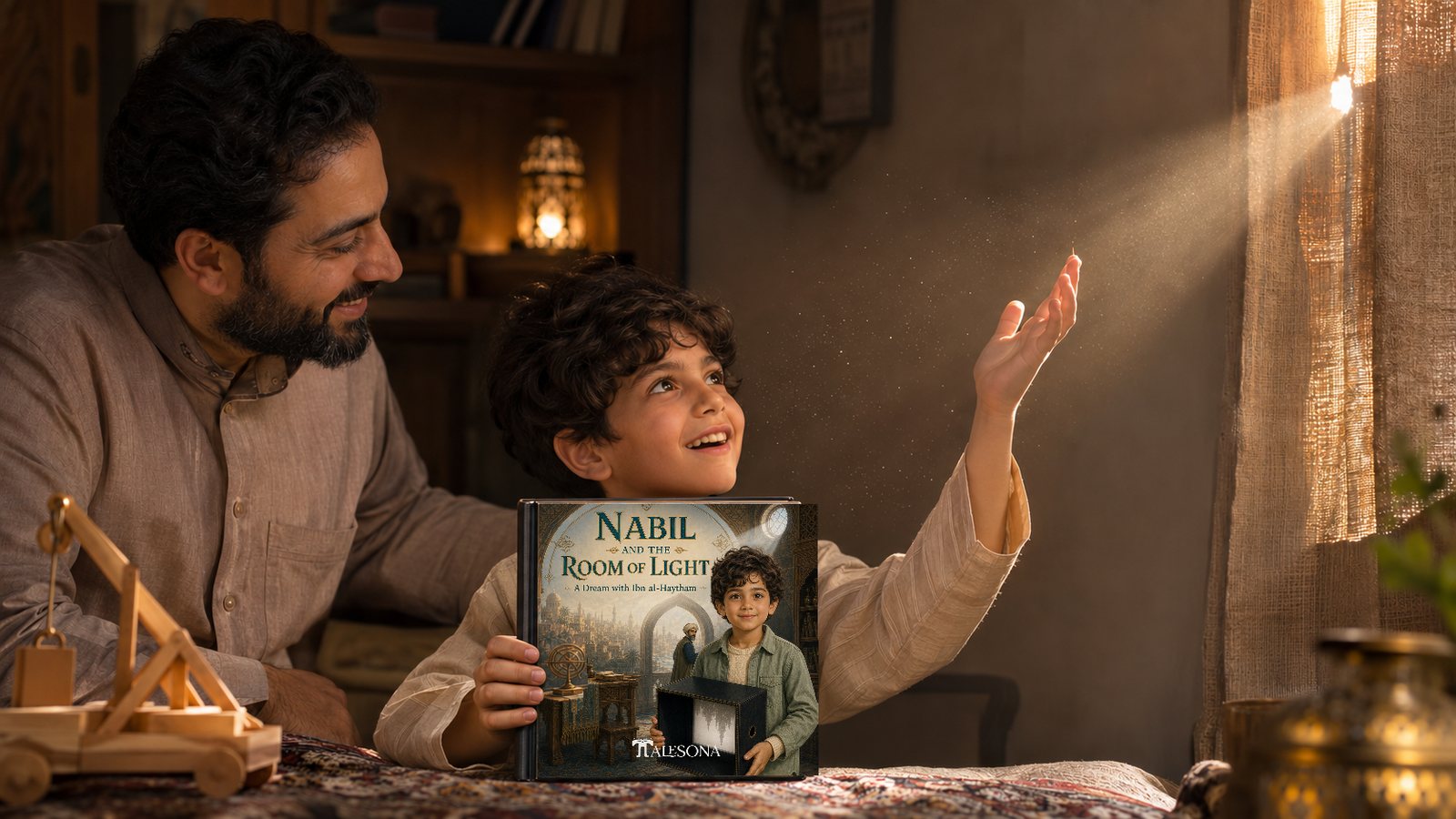
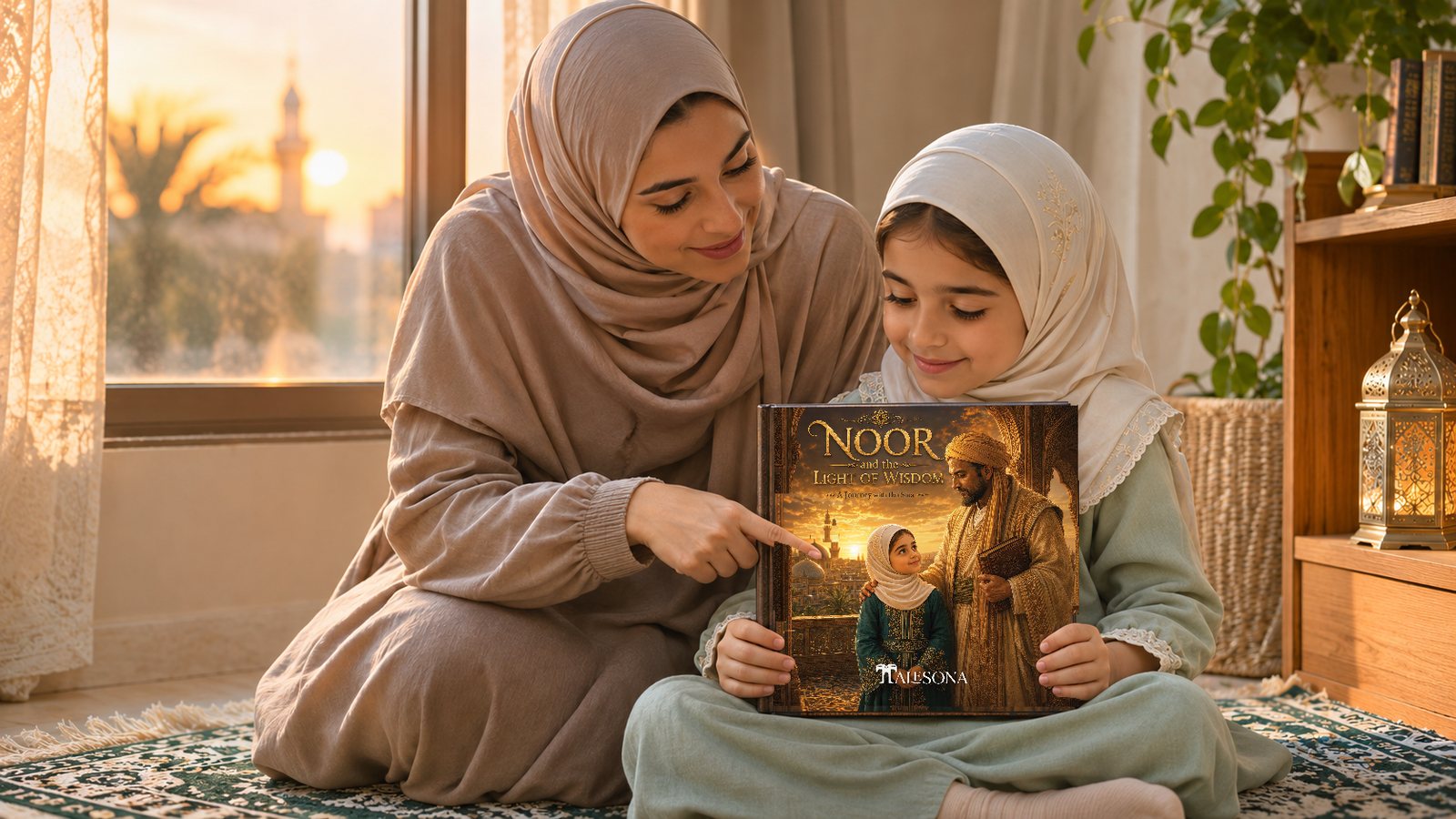
Ibn al-Haytham (c. 965–c. 1040) was a scientist from Basra who spent much of his life in Cairo and studied light and vision. His Book of Optics argued, using experiments, that we see because light enters our eyes. Al-Jazari (1136–1206) was an engineer who served the Artuqid rulers; in 1206 he…
Screens aren't the enemy, but they shouldn't crowd out reading together. The World Health Organization advises no sedentary screen time for children under two and no more than one hour a day for ages two to four ("less is better"), and it encourages reading and storytelling with a caregiver…
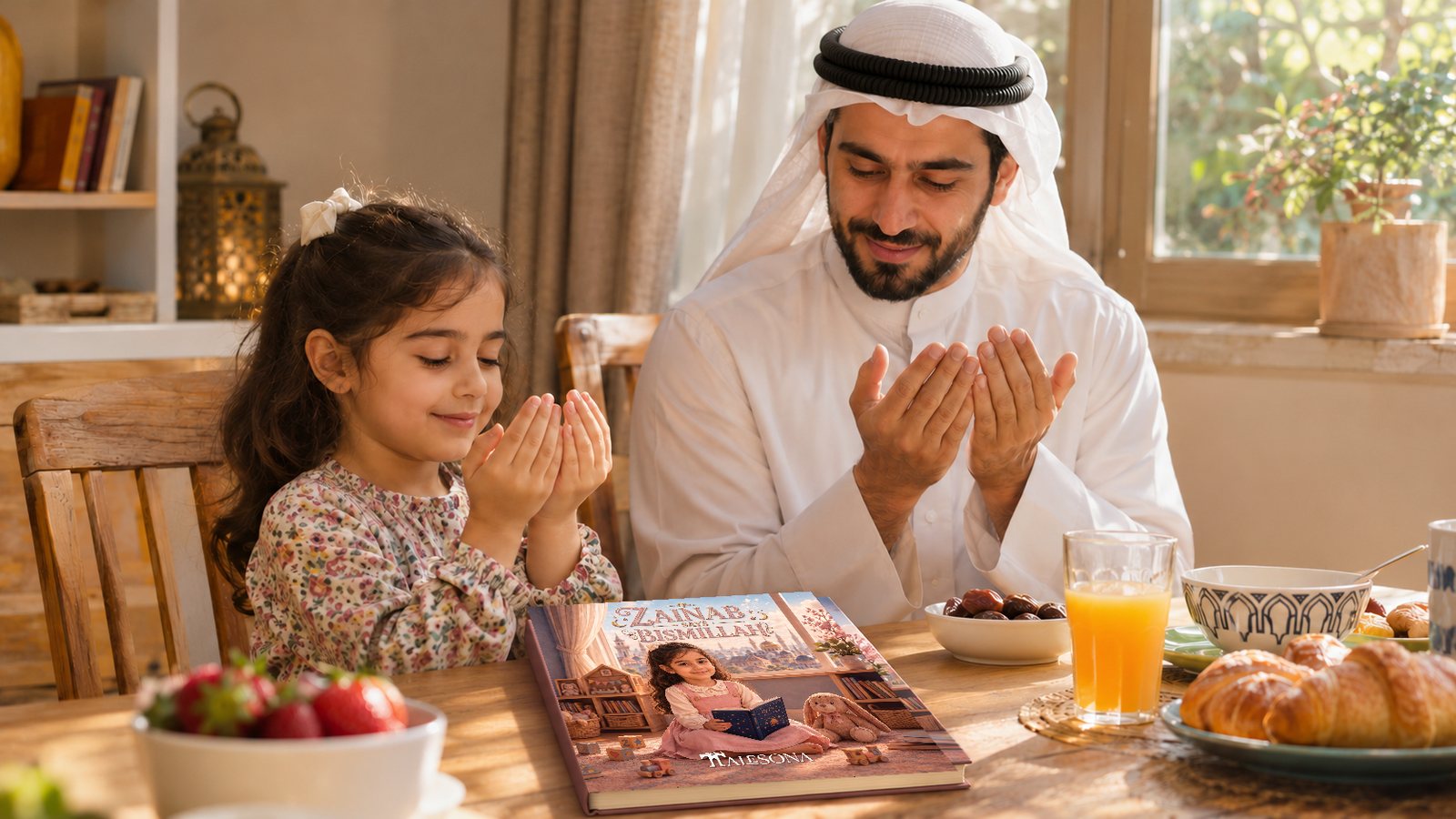
Children learn du'as and Islamic habits most easily when each one is short, said at the same moment every day, and tied to a story they love. Start with one du'a linked to one daily action, such as Bismillah before eating or the sleeping du'a at bedtime. Say it yourself, every time, and let a story…
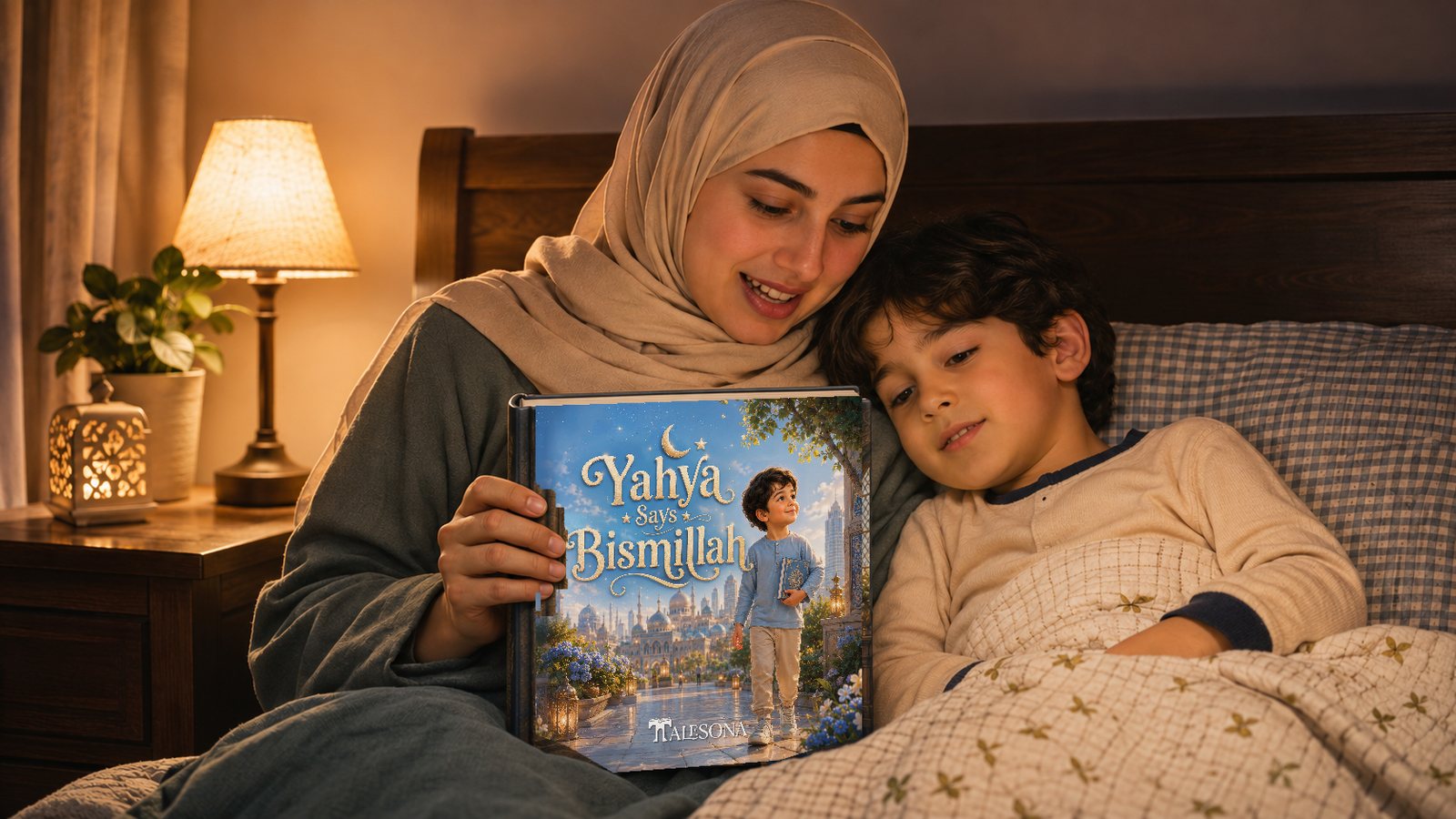
Reading aloud to your child is linked to stronger language, early literacy and a closer parent–child bond, and the American Academy of Pediatrics recommends shared reading from infancy. Bedtime is the easiest place to make it a habit: a predictable "brush, book, bed" routine helps children wind…
Personalized Islamic stories matter because they show a Muslim child two things at once: that their faith (Bismillah, salah, sadaqah, Ramadan, Eid) is a natural, beautiful part of a hero's everyday life, and that the hero is them. When a child sees their own name and face living out values they…
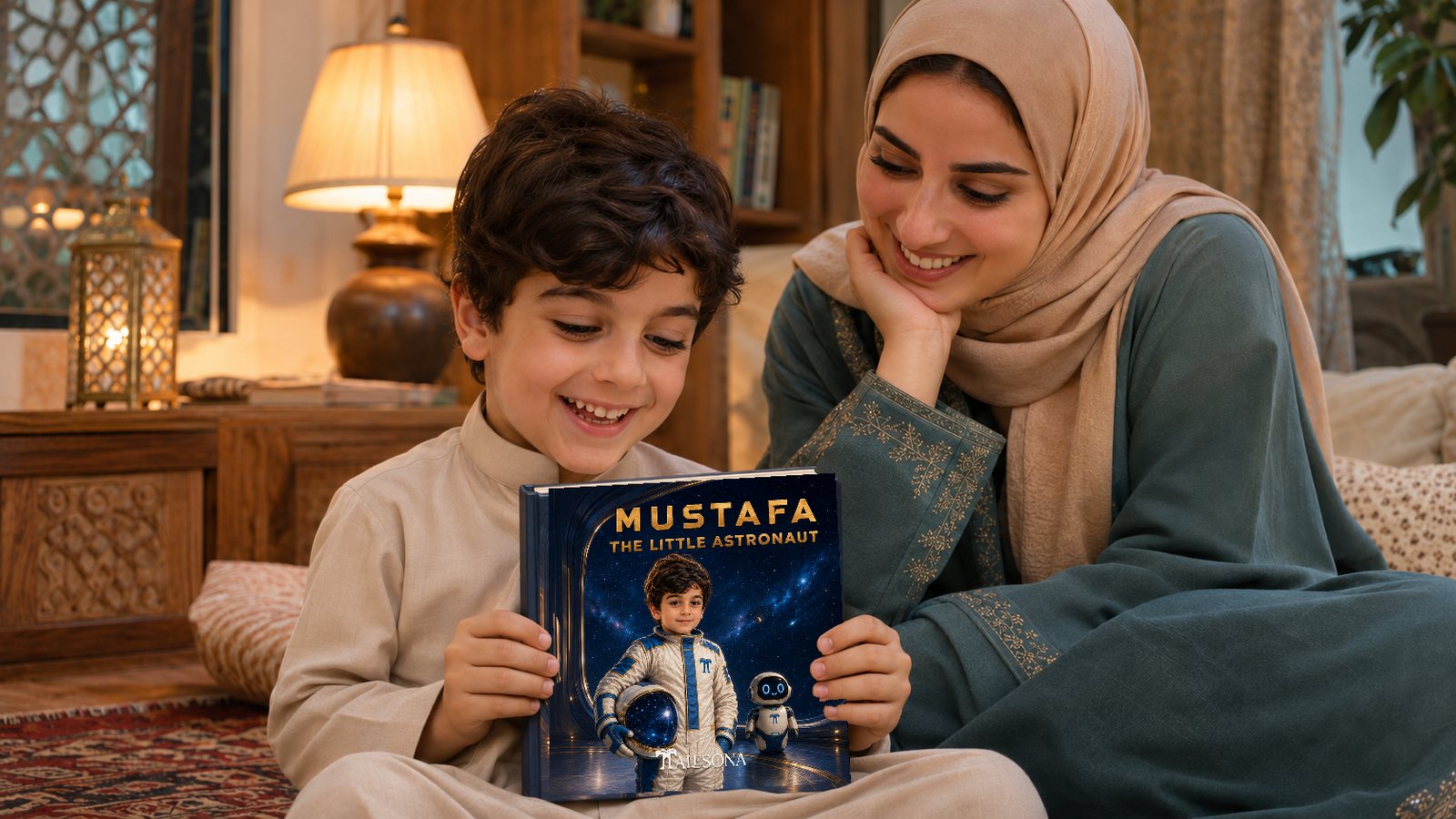
Children love books where they are the hero because anything connected to "me" grabs their attention and sticks in their memory. Psychologists call this the self-reference effect, and small studies of personalized picture books found that preschoolers talked more during reading and learned new…