Umrah with Kids: How to Prepare Your Child Before the Journey
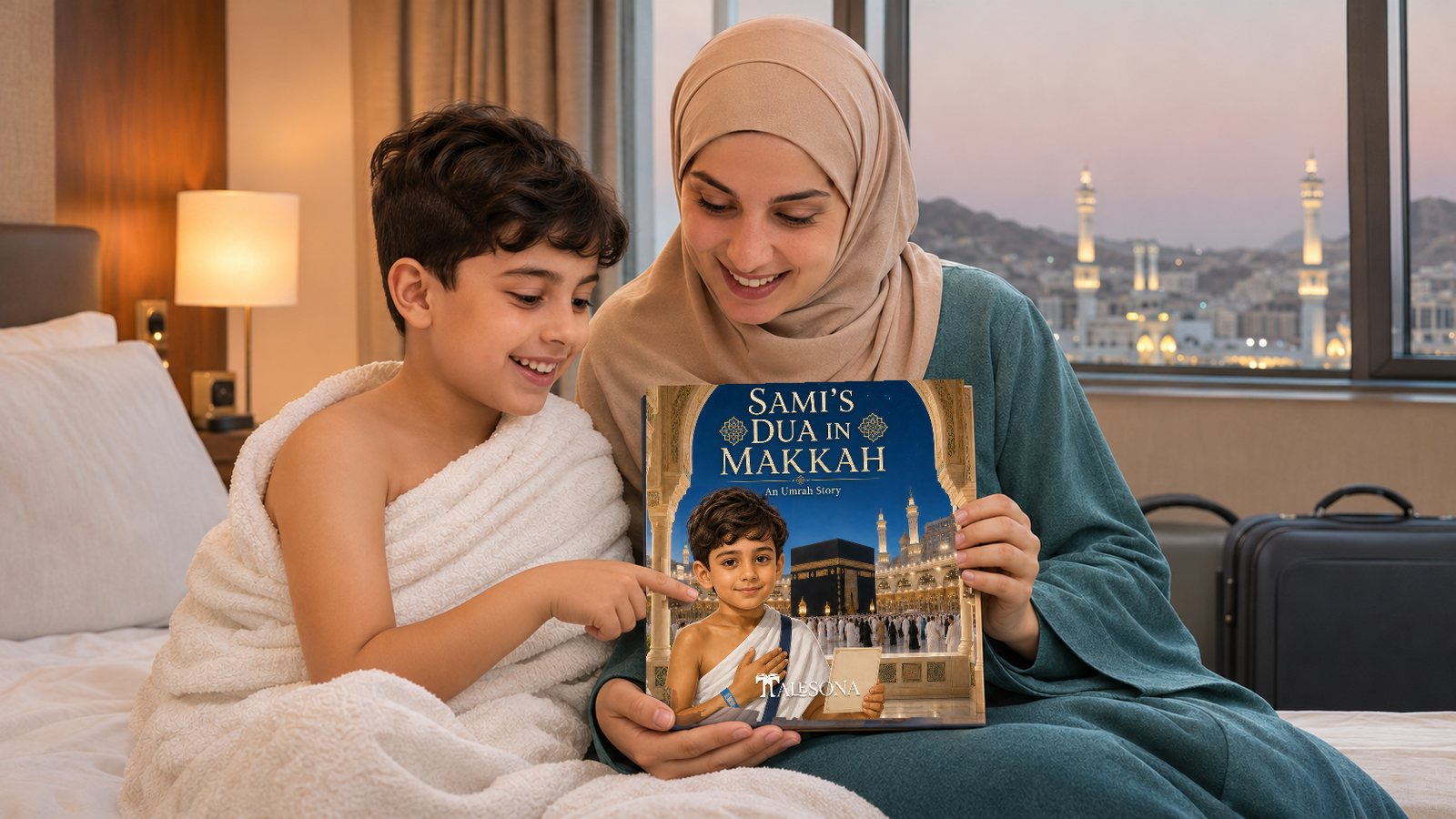
Taking children on Umrah is a gift they may remember all their lives: the first sight of the Kaaba, the sound of the talbiyah, the feeling of walking with thousands of people who all came for the same reason. Children have been part of this journey since the time of the Prophet ﷺ. When a woman lifted up a child and asked whether he could perform Hajj, the Prophet ﷺ answered: "Yes, and you will have a reward" (Sahih Muslim 1336). With a little preparation, children can understand what they are seeing instead of only feeling tired and overwhelmed.
Before you travel: tell the story first
Children cope best with new places when they already know the story. In the weeks before the journey:
- Explain what Umrah is in a few sentences: we travel to Makkah, put on ihram, circle the Kaaba seven times, walk between Safa and Marwa seven times, and ask Allah for good things.
- Show pictures of the Masjid al-Haram, the Kaaba and the mas'a, so the size and the crowds are not a shock.
- Tell the story of Hajar running between Safa and Marwa to find water for her son Isma'il. Children understand Sa'i much better when they know who first walked it, and why.
- Read a story set in Makkah. In Dua in Makkah (ages 7 to 10), a boy practises a long dua for the moment he sees the Kaaba, then forgets every word when the moment comes, and discovers that the truest dua is the simple one from the heart. With your child as the hero, they arrive already knowing how the journey goes.
Teach a few simple words
Children do not need to memorise long supplications. A few short phrases are enough, and they can say them in their own words too:
- The talbiyah: "Labbayk Allahumma labbayk" (Here I am, O Allah, here I am).
- Bismillah, Allahu akbar at the start of each round of tawaf.
- A personal dua: ask your child to think of three things they want to ask Allah for. Writing them on a small card helps them remember.
Safety in the crowds
- Identification: a bracelet or card with your name, phone number and hotel.
- A meeting point: agree on one clear, fixed place, and practise asking a guard or an official for help.
- Bright clothing: a distinctive colour makes a child easier to spot.
- Timing: perform tawaf at quieter hours when possible, and use the upper floors when the ground floor is crowded.
- Stay together: a younger child can be carried or use a stroller where it is allowed; an older child holds a guardian's hand at all times.
Health and comfort
- Carry water and small snacks; children dehydrate quickly in the heat.
- Choose comfortable, light clothing and sandals that have been worn before the trip.
- Plan rest between the rites. There is no need to do everything in one go with a tired child.
- Follow current health and entry requirements, which you can check on the official Saudi channels such as the Nusuk platform.
During the rites: let it be their Umrah
Let children set the pace when you can. Count the rounds of tawaf together on fingers or a counter, and point out the green lights in the mas'a where Hajar is remembered. Do not worry if their du'as are short or unusual. In Dua in Makkah, the boy's long, practised dua disappears, and he simply says: "Thank You, Allah, for bringing me here." That is often the most sincere dua of all.
After you come home
Memories fade quickly at a young age, so help your child keep them. Make a small album of photos, ask them to tell the story to their grandparents, and keep the dua card they carried. A personalized book in which they are the pilgrim becomes a way to relive the journey, and to prepare younger siblings for theirs.
Key takeaways
- Children have been part of Hajj and Umrah since the time of the Prophet ﷺ.
- Tell the story before you travel: the rites, the places, and the story of Hajar.
- Teach a few short phrases and let children make their own simple dua.
- Plan for crowds: identification, a meeting point, bright clothes and quieter hours.
- Keep the memory alive at home with photos, retelling and a story they can reread.
Sources
- Sahih Muslim 1336 (a child's Hajj and the parent's reward). https://sunnah.com/muslim:1336a
- Nusuk, the official Saudi platform for Umrah and visitors. https://www.nusuk.sa
Preparing for Umrah? Upload one photo and view a free preview of a story where your child is the pilgrim.
FAQ
Is Umrah valid for a child?
Yes. When a woman lifted up a child and asked the Prophet ﷺ whether the child could perform Hajj, he said yes, and that she would have a reward (Sahih Muslim 1336). Scholars apply the same to Umrah. It does not replace the obligatory Hajj after puberty.
What is the best age to take a child on Umrah?
Families go with children of every age. Children from about six or seven can usually understand and remember more of the journey, but what matters most is their health and your preparation.
How do I keep my child safe in the crowds?
Use an identification bracelet with your phone number, agree on a fixed meeting point, dress your child in a bright colour, and avoid the busiest times when you can.
Is there a Talesona story about Umrah?
Yes. Dua in Makkah (ages 7 to 10) follows a boy through his Umrah, from the miqat and the talbiyah to the moment he first sees the Kaaba.
Where can I check the current Umrah requirements?
Rules on permits and visas change, so check the official Saudi channels, such as the Nusuk platform, before you travel.