Why Personalized Islamic Stories Matter for Muslim Kids
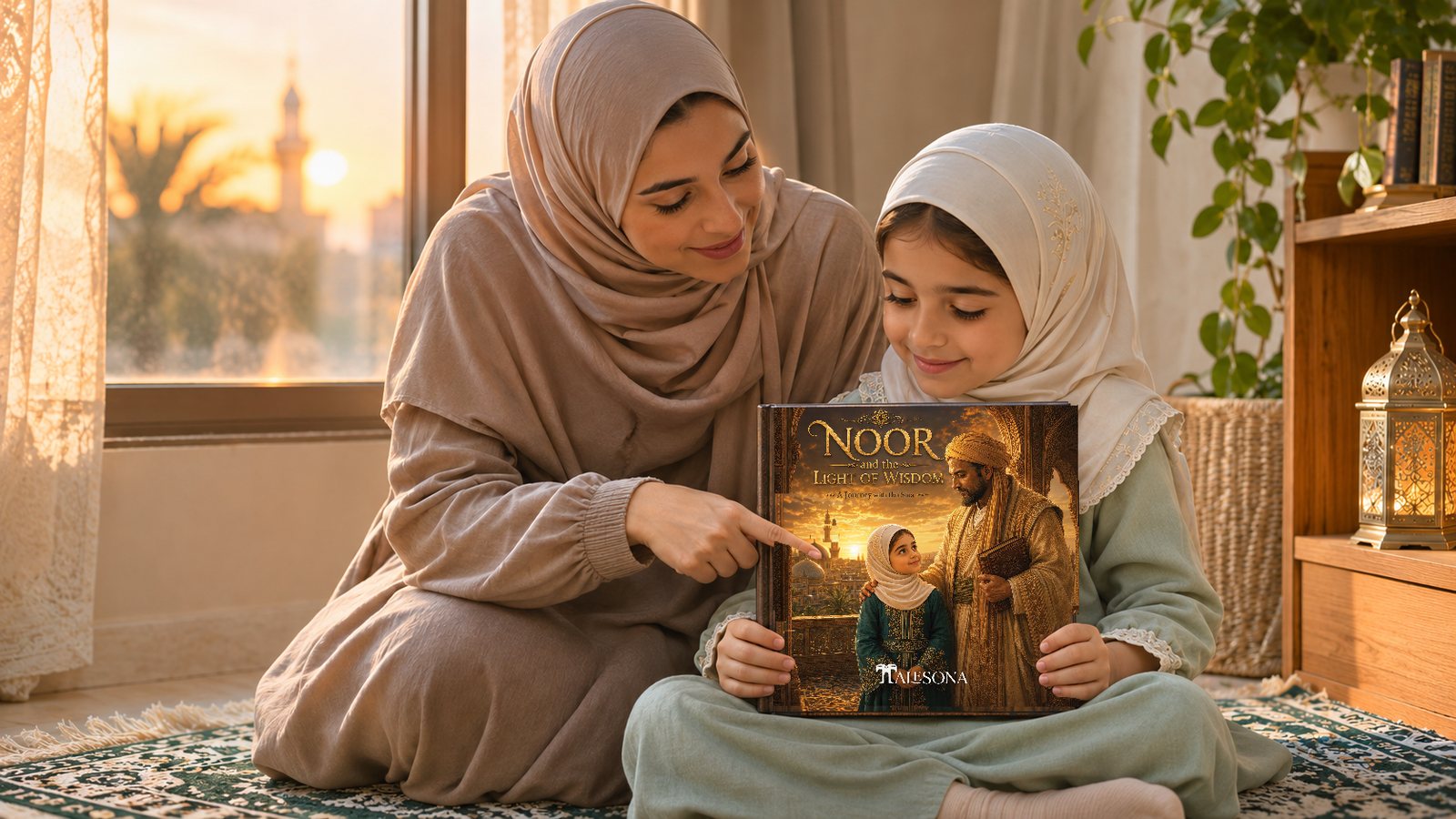
Personalized Islamic stories matter because they show a Muslim child two things at once: that their faith (Bismillah, salah, sadaqah, Ramadan, Eid) is a natural, beautiful part of a hero's everyday life, and that the hero is them. When a child sees their own name and face living out values they hear about at home, faith stops being something only adults do and starts to feel like their own.
Why seeing yourself in a book matters
In 1990, the scholar Rudine Sims Bishop described books as mirrors, windows and sliding glass doors. Windows let children look into other lives. Mirrors let them see their own. "When lighting conditions are just right," she wrote, "a window can also be a mirror." Her point was that children who rarely find themselves in books receive a quiet message about how much they are valued.
That concern is not abstract. The Centre for Literacy in Primary Education (CLPE) in the UK runs an annual survey of ethnic representation in children's books. Its report on books published in 2018 found that only 7% featured a Black, Asian or minority ethnic character, and only 4% had one as the main character. The survey looks at ethnicity rather than religion, but many Muslim families will recognise the pattern: stories where children pray, fast, say Bismillah or wear Eid clothes are still a small corner of the bookshop.
Researcher Natalia Kucirkova, who has studied personalized books, notes that personalization is one way to help address the underrepresentation of minority groups in children's literature. A personalized book does not wait for the publishing industry to catch up. It puts the child on the page directly.
Stories in the Islamic tradition
Teaching through story is deeply rooted in Islam. In the Qur'an, Allah tells the Prophet ﷺ: "We relate to you ... the best of stories in what We have revealed to you of this Qur'an" (Surah Yusuf, 12:3), and much of its guidance comes through the lives of prophets and righteous people.
The Prophet ﷺ also taught children gently, in the moment. 'Umar ibn Abi Salamah, who grew up in his care, described how his hand used to wander around the dish while eating, and the Prophet ﷺ told him: "O boy! Mention the Name of Allah and eat with your right hand, and eat of the dish what is nearer to you." 'Umar said he followed those instructions from then on (Sahih al-Bukhari 5376). There was no lecture, just a short, warm instruction tied to a real moment. Good Islamic stories for children work the same way.
What a personalized Islamic story adds
Faith as daily life, not a special occasion
Children learn what is "normal" from what they see repeated. Stories built around everyday worship, such as My Day Begins with Bismillah and The Five Prayers, place saying Allah's name and praying inside an ordinary child's day. When the child in those pages has your child's face, the message is simple: this is what my day looks like too.
Values shown, not just told
Generosity is easier to understand when you watch someone practise it. A story like Sadaqah That Grows turns giving into something a hero does, not just a rule to remember. Its title echoes the Qur'anic image of charity as a single seed that grows into seven ears of grain (Surah al-Baqarah, 2:261).
The seasons of a Muslim year
Ramadan, Eid and the journey to Makkah are some of the most vivid memories of a Muslim childhood. Stories such as The Last Iftar Box, The Eid Dress and Dua in Makkah give children a way to anticipate those moments, and to relive them long after.
Heroes from their own heritage
Muslim children deserve to know that people from their tradition shaped science and engineering. The Room of Light introduces Ibn al-Haytham, who studied light and vision, and The Elephant Clock introduces al-Jazari and his famous water clock. Placing a child alongside these figures says: curiosity and faith belong together, and they belong to you.
The language of home
Many Talesona stories are also available in Arabic, which helps families who want their children to hear faith-related words such as du'a, sadaqah and iftar in the language they come from.
For children growing up as a minority
For Muslim children in countries where they are a minority, a personalized Islamic story can also be practical. It gives them words and pictures for things their classmates may ask about: "Why do you fast?", "What is Eid?", "Why do you say Bismillah before eating?" A child who has seen themselves in those scenes often finds it easier to explain them with pride rather than embarrassment.
It can also be a gentle bridge. Sharing a story about Eid with a non-Muslim friend or teacher turns a book that is a mirror for your child into a window for someone else.
How to choose a good Islamic children's story
Look for:
- Accuracy. Du'as, practices and historical facts should be correct. Good books reference sources or are easy to check with a trusted teacher.
- Warmth, not fear. Young children learn faith most naturally through love, beauty and belonging.
- Age fit. Short sentences and clear images for little ones; more story and detail for older readers.
- A real story. A hero, a challenge and a satisfying ending, not just a list of rules.
- Room for questions. Good books spark conversation after the last page.
And remember to balance mirrors with windows. Your child benefits from stories about themselves and stories about people who are different from them.
Key takeaways
- Children notice who appears in books, and who doesn't. Representation shapes how they see themselves.
- Personalized Islamic stories show faith as an everyday part of a hero's life, with your child as that hero.
- Teaching through story has deep roots in the Qur'an and the Sunnah.
- Seasonal stories (Ramadan, Eid, Makkah) and heritage heroes help children connect faith, memory and identity.
- Choose books that are accurate, warm, age-appropriate and genuinely good stories.
Sources
- Bishop, R. S. (1990). Mirrors, windows, and sliding glass doors. Perspectives: Choosing and Using Books for the Classroom, 6(3). https://freedomriders.facinghistory.org/sites/default/files/2022-10/Windows_Mirrors_and_Sliding_Glass_Doors.pdf
- Centre for Literacy in Primary Education (2019). Reflecting Realities: Survey of ethnic representation within UK children's literature 2018. https://clpe.org.uk/research/reflecting-realities-survey-ethnic-representation-within-uk-childrens-literature-published
- Kucirkova, N. (2018). Personalized books for children: What you need to know. Psychology Today. https://www.psychologytoday.com/gb/blog/just-for-you/201809/personalized-books-for-children-what-you-need-to-know
- The Qur'an, Surah Yusuf 12:3 (Sahih International). https://corpus.quran.com/translation.jsp?chapter=12&verse=3
- The Qur'an, Surah al-Baqarah 2:261 (Sahih International). https://legacy.quran.com/2/261
- Sahih al-Bukhari 5376. https://sunnah.com/bukhari:5376
Want to see your child as the hero of an Islamic story? Upload one photo and view a free preview before you decide.
FAQ
What age are personalized Islamic stories for?
Talesona stories are written for roughly ages 2 to 10. Younger children enjoy the pictures and hearing their name; older children follow the story and its values more deeply.
Are the stories available in Arabic?
Many Talesona stories are also available in Arabic, alongside English.
Can siblings each have their own book?
Yes. Each book is made from one child's photo and name, so two sisters can have two books, and each one is the hero of her own.
How do I check that an Islamic children's book is accurate?
Look for du'as and hadith that are referenced, and check anything you are unsure about with a teacher or scholar you trust. Our blog articles give references for any hadith we quote.
Should my child only read Islamic books?
No. Islamic stories are a strong foundation for identity, and stories about other people and places help children understand the wider world. Both kinds of books are valuable.