Screen Time vs. Storybooks: How to Help Books Win
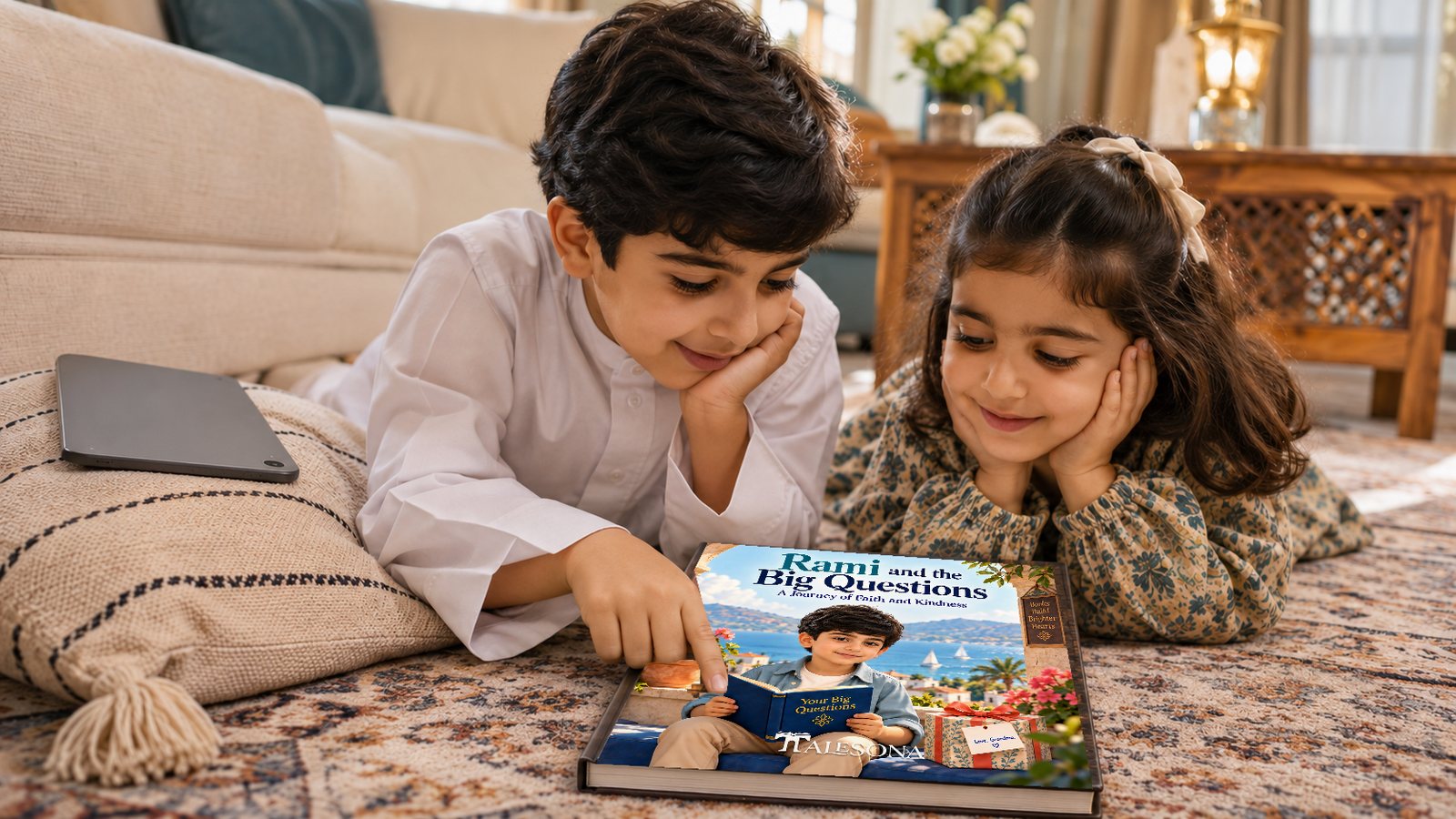
Screens aren't the enemy, but they shouldn't crowd out reading together. The World Health Organization advises no sedentary screen time for children under two and no more than one hour a day for ages two to four ("less is better"), and it encourages reading and storytelling with a caregiver instead. Books win when they are easy to reach, built into a daily routine and genuinely exciting to the child, not when they are offered as a punishment for losing the tablet.
What the guidelines actually say
World Health Organization (2019)
For children under five, the WHO's guidance on physical activity, sedentary behaviour and sleep recommends:
- Under 1 year: screen time is not recommended.
- 1 year: sedentary screen time is not recommended.
- 2–4 years: no more than 1 hour of sedentary screen time a day; less is better.
Crucially, the WHO doesn't just say "less screen". It points to what should fill that time: "Quality sedentary time spent in interactive non-screen-based activities with a caregiver, such as reading, storytelling, singing and puzzles, is very important for child development."
American Academy of Pediatrics
The AAP's family media guidance encourages families to set screen-free zones, such as the dinner table, homework time and before bed, and reminds parents that they are role models for healthy digital habits. In its 2024 literacy policy, the AAP supported limited screen use in early childhood and favoured print books for shared reading.
Why reading a print book together is different
It isn't only about the screen itself. It's about what happens between parent and child.
In a 2019 study published in Pediatrics, researchers at the University of Michigan observed 37 parent–toddler pairs reading print books, basic e-books and enhanced e-books with sounds and animations. With e-books, parents and toddlers talked less and collaborated less. Parents also spent more time talking about the device itself ("Don't push that button") and less about the story.
A paediatrician involved in the AAP's 2024 statement made a similar point: touchscreens are typically passive or solitary, and lack the back-and-forth of reading a print book together.
That doesn't make digital books useless. The same researchers suggest that if you use e-books, read them the way you would a print book: together, close, talking about the story. The point is the shared conversation, whatever the format.
Eight practical ways to help books win
1. Sequence, don't ban
"Book first, then show" is easier to keep than "no screens ever". It also avoids turning books into the boring alternative to something forbidden.
2. Make bedtime screen-free
The hour before sleep is where books have the clearest advantage. Screens out of the bedroom, a story in. (See Reading Aloud to Your Child: A 10-Minute Bedtime Routine.)
3. Put books where hands go
Children grab what's in reach. A low basket of books by the sofa, in the car or next to the breakfast table competes far better than a shelf in another room.
4. Let them choose
Ownership matters. Offer two or three books and let your child pick, even if it's the same favourite again.
5. Make the story about them
Children pay extra attention to stories about themselves. That's the thinking behind personalized books: he dreams of space, so we put him there, in The Little Astronaut. A football-mad child who sees themselves on the pitch in One Kick, One Dream has a reason to pick the book up that no cartoon can match.
6. Let the screen lead to a book
If your child loved a video about rockets, follow it with a space story. If they watched a clip about machines, try The Elephant Clock, a story about the engineer al-Jazari. Interests sparked on a screen can deepen on a page.
7. Read where they can see you
Children copy what we do. If they see you reading (a book, the Qur'an, a magazine) rather than scrolling, reading looks like a normal part of grown-up life.
8. Swap, don't just subtract
Taking away 30 minutes of screen time leaves a gap, and gaps get filled with complaints. Replace one regular screen slot with a specific, enjoyable alternative: a story together, a library visit, a "you choose the book" night.
What to say when they protest
- "Screens are off now. Do you want the space story or the football story?" (A choice, not a debate.)
- "We can watch after we read one book together."
- "I miss reading with you. Come and sit with me."
Keep it calm and consistent. The goal is a routine your child stops arguing with because it's simply how evenings go.
A note on guilt
Most families use screens, sometimes more than they'd like, and that doesn't make anyone a bad parent. Guidance like the WHO's is a direction to aim for, not a test to pass. If today's reading time was five minutes squeezed in before sleep, it still counted. Tomorrow you can try for ten.
Key takeaways
- WHO: no sedentary screen time under 2; no more than 1 hour a day at ages 2–4, and less is better.
- The WHO and AAP both point to reading together as a valuable alternative.
- Research found parents and toddlers talk less when reading e-books than print books.
- Help books win by sequencing, screen-free bedtimes, books within reach and stories children care about.
- Swap screen time for something specific and enjoyable; don't just take it away.
Sources
- World Health Organization (2019). To grow up healthy, children need to sit less and play more. https://www.who.int/news/item/24-04-2019-to-grow-up-healthy-children-need-to-sit-less-and-play-more
- American Academy of Pediatrics. How to make a family media plan. HealthyChildren.org. https://www.healthychildren.org/English/family-life/Media/Pages/How-to-Make-a-Family-Media-Use-Plan.aspx
- American Academy of Pediatrics (2024). Beyond literacy: Shared reading starting in infancy offers lifelong benefits. HealthyChildren.org. https://www.healthychildren.org/English/news/Pages/beyond-literacy-shared-reading-starting-in-infancy-offers-lifelong-benefits.aspx
- Munzer, T. G., Miller, A. L., Weeks, H. M., Kaciroti, N., & Radesky, J. (2019). Differences in parent-toddler interactions with electronic versus print books. Pediatrics, 143(4), e20182012. Summary: https://www.michiganmedicine.org/health-lab/story-time-better-print-books-e-books-study-suggests
- Kucirkova, N., Messer, D., & Sheehy, K. (2014). Reading personalized books with preschool children enhances their word acquisition. First Language, 34(3), 227–243. https://oro.open.ac.uk/40613
Want a book your child will choose over the tablet? See a free preview of a story where they are the hero.
FAQ
Is reading on a tablet as good as a printed book?
For shared reading with young children, research suggests print books lead to more parent–child talk. If you use e-books, read together and talk about the story as you would with print. Talesona books come as printed books or e-books, so families can choose what suits them.
How much screen time is OK for a 3-year-old?
The WHO recommends no more than one hour of sedentary screen time a day for children aged two to four, and says less is better.
Do audiobooks count as reading?
They are a valuable way to enjoy stories and build listening skills. The AAP encourages back-and-forth conversation around digital books and audiobooks, so listening together and talking about it adds the most.
My child only wants the tablet. Where do I start?
Start small: one book at bedtime, chosen by your child, every night. Pick stories about things they already love, or a book where they are the hero, and build from there.
Should I use books as a reward for less screen time?
It's better not to frame reading as a reward or a punishment. Make it a normal, enjoyable part of the day, and it will compete on its own merits.