Why Children Love Books Where They Are the Hero
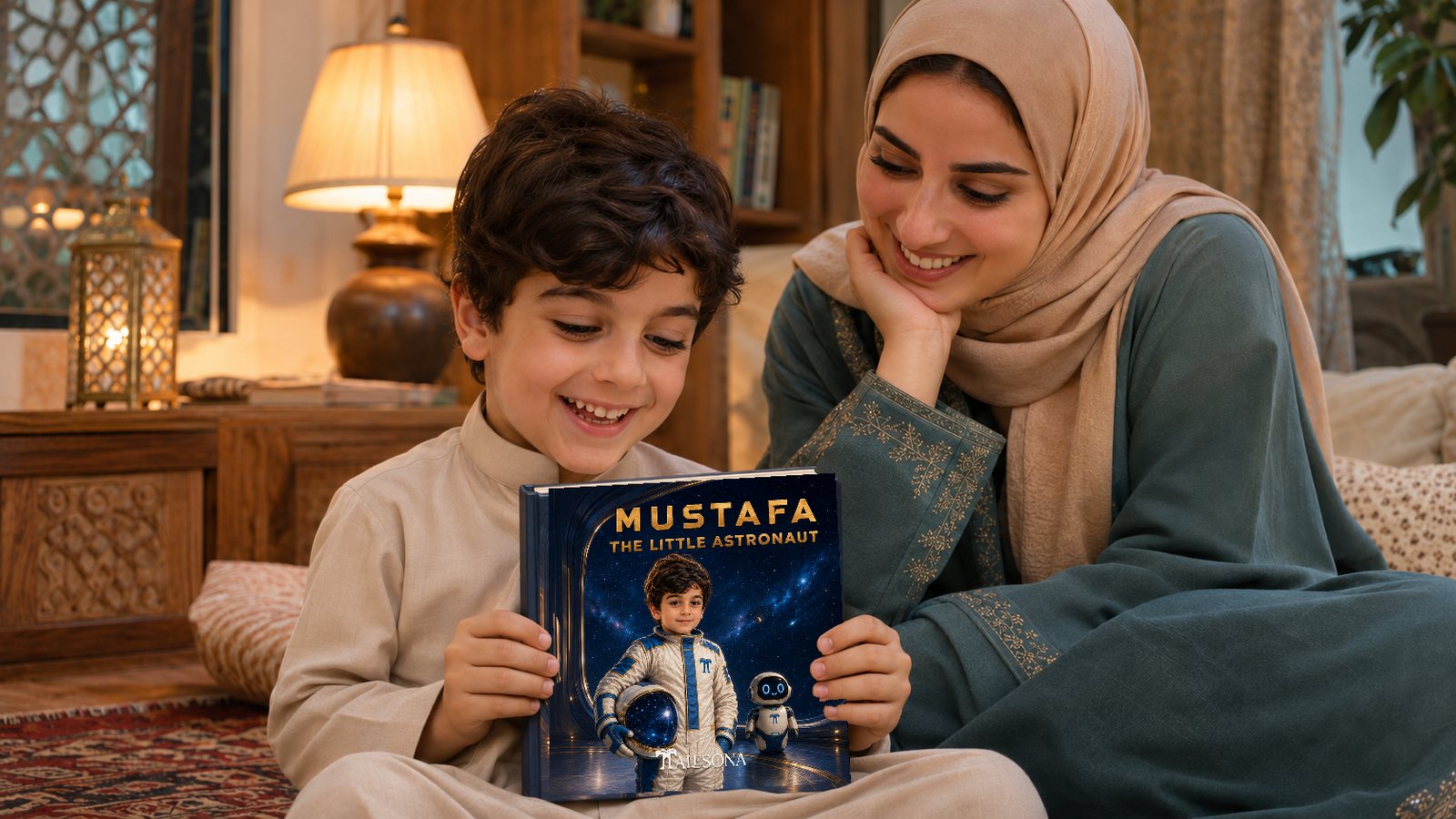
Children love books where they are the hero because anything connected to "me" grabs their attention and sticks in their memory. Psychologists call this the self-reference effect, and small studies of personalized picture books found that preschoolers talked more during reading and learned new words better on the personalized pages. The effect is strongest when the story itself is good and a grown-up reads it with them.
What is the self-reference effect?
Most of us notice our own name across a noisy room. That is the self-reference effect in everyday life: information linked to ourselves gets processed more deeply and remembered better.
Children show it early. In a study published in the British Journal of Developmental Psychology, 64 children aged four to six sorted pictures of toys into "mine" and "someone else's" piles. In a surprise memory test afterwards, they remembered the toys they had been told were theirs better than the toys that belonged to someone else. Interestingly, the advantage was larger in the younger children.
In other words, from a young age, "this is about me" works like a highlighter pen in a child's mind.
What happens when a child sees their own name in a story?
Researcher Natalia Kucirkova and colleagues at the Open University tested this directly with picture books that had a personalized part and a non-personalized part.
- More talk. Three-year-olds who shared personalized books with an adult spoke more, and for longer, than with non-personalized sections. Much of that talk was about themselves ("That's me!", "I have a red coat too").
- Better word learning. In a second study, preschoolers heard a book containing unfamiliar words, some in personalized sections and some not. After repeated readings a week apart, they knew significantly more about the words from the personalized sections.
These studies were small (35 and 18 children), so the findings are promising rather than final. But they match what many parents notice at home: a child who usually drifts off halfway through a story will sit up when their own name appears.
Three reasons a "me" story pulls children in
1. Attention
Young children's attention is precious and short. A familiar face on the page is a reason to look closer, turn the next page and find out what "I" do next. Kucirkova suggests the word-learning boost may come partly from children simply paying more attention to the personalized pages.
2. Motivation and confidence
When a child sees themselves leading a parade, scoring a goal or floating in space, the story quietly says: someone like you can do this. That is the idea behind The Little Astronaut: he dreams of space, so we put him there. For a child about to face something new, such as in My First Day of School, seeing "themselves" walk through the classroom door first can make the real door feel a little smaller.
3. Conversation
The talk that personalized books spark is valuable in itself. Every "That's me!" is an opening for a parent to ask, "What would you do next?" or "Were you brave like that today?" Shared reading is, at heart, a conversation, and a story about your child gives that conversation an easy starting point.
That is the whole idea behind a Talesona book: she's not just reading the story… she's in it.
What personalization can't do on its own
It would be dishonest to stop there. The same researcher who documented these benefits has also written about their limits, and they are worth taking seriously.
- A name is not a story. Personalization is most useful when it draws a child towards high-quality language, illustrations and plot. A weak story with a child's name on it is still a weak story.
- Children also need windows. Personalized books are mirrors. Children also need books about people, places and lives very different from their own. A healthy bookshelf has both.
- Self-focus. Because children talk about themselves more with personalized books, it helps for adults to widen the conversation: "How do you think the other children felt?"
- Data matters. Personalized books use a child's details, so parents should ask how a company handles them. At Talesona, the original uploaded photo is deleted within 30 days.
Three questions worth asking about any personalized book
Kucirkova suggests parents ask:
- Is personalization drawing my child towards good content, with rich language, beautiful illustrations and a real story?
- Is my child's data collected and kept safe by a company I can trust?
- How involved were my child and family in making it?
The third question is a good reminder that the book is a beginning, not the whole experience. You bring it to life when you read it together.
How to get the most from a book where your child is the hero
- Pause on their name. Let them say it with you, or point to it on the cover.
- Ask "what would you do?" At each turning point, invite your child to predict or choose.
- Connect to real life. If the hero kicks a ball in One Kick, One Dream, talk about the last time your child played.
- Read it again (and again). Research on three-year-olds found that hearing the same story repeatedly helped them learn and keep new words better than hearing different stories. Requests for "again!" are a good sign.
- Widen the circle. In Mira Leads the Rose Parade, ask about the people watching the parade as well as the hero leading it.
Key takeaways
- Children pay extra attention to information about themselves, a pattern called the self-reference effect.
- Small studies found preschoolers talked more and learned new words better in personalized book sections.
- Personalization helps most alongside a strong story and an adult reading together.
- Balance "mirror" books about your child with "window" books about others.
- Ask how any personalized book company handles your child's photo and data.
Sources
- Cunningham, S. J., Vergunst, F., Macrae, C. N., & Turk, D. J. (2013). Exploring early self-referential memory effects through ownership. British Journal of Developmental Psychology, 31(3), 289–301. https://research-information.bris.ac.uk/en/publications/exploring-early-self-referential-memory-effects-through-ownership/
- Kucirkova, N., Messer, D., & Sheehy, K. (2014). The effects of personalization on young children's spontaneous speech during shared book reading. Journal of Pragmatics, 71, 45–55. https://oro.open.ac.uk/40735
- Kucirkova, N., Messer, D., & Sheehy, K. (2014). Reading personalized books with preschool children enhances their word acquisition. First Language, 34(3), 227–243. https://oro.open.ac.uk/40613
- Kucirkova, N. (2015). Big Picture: A "selfie" with a difference. The Psychologist, British Psychological Society. https://bps.org.uk/psychologist/big-picture-selfie-difference
- Kucirkova, N. (2018). Personalized books for children: What you need to know. Psychology Today. https://www.psychologytoday.com/gb/blog/just-for-you/201809/personalized-books-for-children-what-you-need-to-know
- Horst, J. S., Parsons, K. L., & Bryan, N. M. (2011). Get the story straight: Contextual repetition promotes word learning from storybooks. Frontiers in Psychology, 2, 17. https://www.frontiersin.org/journals/psychology/articles/10.3389/fpsyg.2011.00017/full
Curious what your child looks like as the hero? Upload one photo and see a free preview of their story before you decide.
FAQ
Do personalized books really help children learn?
Early research is encouraging. Small studies found preschoolers learned new words better from personalized sections and spoke more during reading. The samples were small, so treat personalization as a helpful extra on top of regular shared reading, not a replacement for it.
At what age do children enjoy seeing themselves in a story?
Recognition of their own name and face develops in the toddler and preschool years, and the studies above involved children aged about three to six. Talesona stories are written for roughly ages 2 to 10, and older children often enjoy the story as a keepsake as well as a read.
Will a personalized book make my child self-centred?
Not if it's one book among many. Use it to talk about other characters' feelings too, and keep plenty of books about other people and places on the shelf.
Is a personalized book better than a classic picture book?
They do different jobs. Classics open windows onto other worlds; a personalized book holds up a mirror. Most children benefit from both.
Why does my child want the same story every night?
Repetition is how young children master language and feel secure. Research on storybook reading found that repeated readings of the same story helped three-year-olds retain new words.