Teaching Kids Salah: A Gentle, Age-by-Age Guide
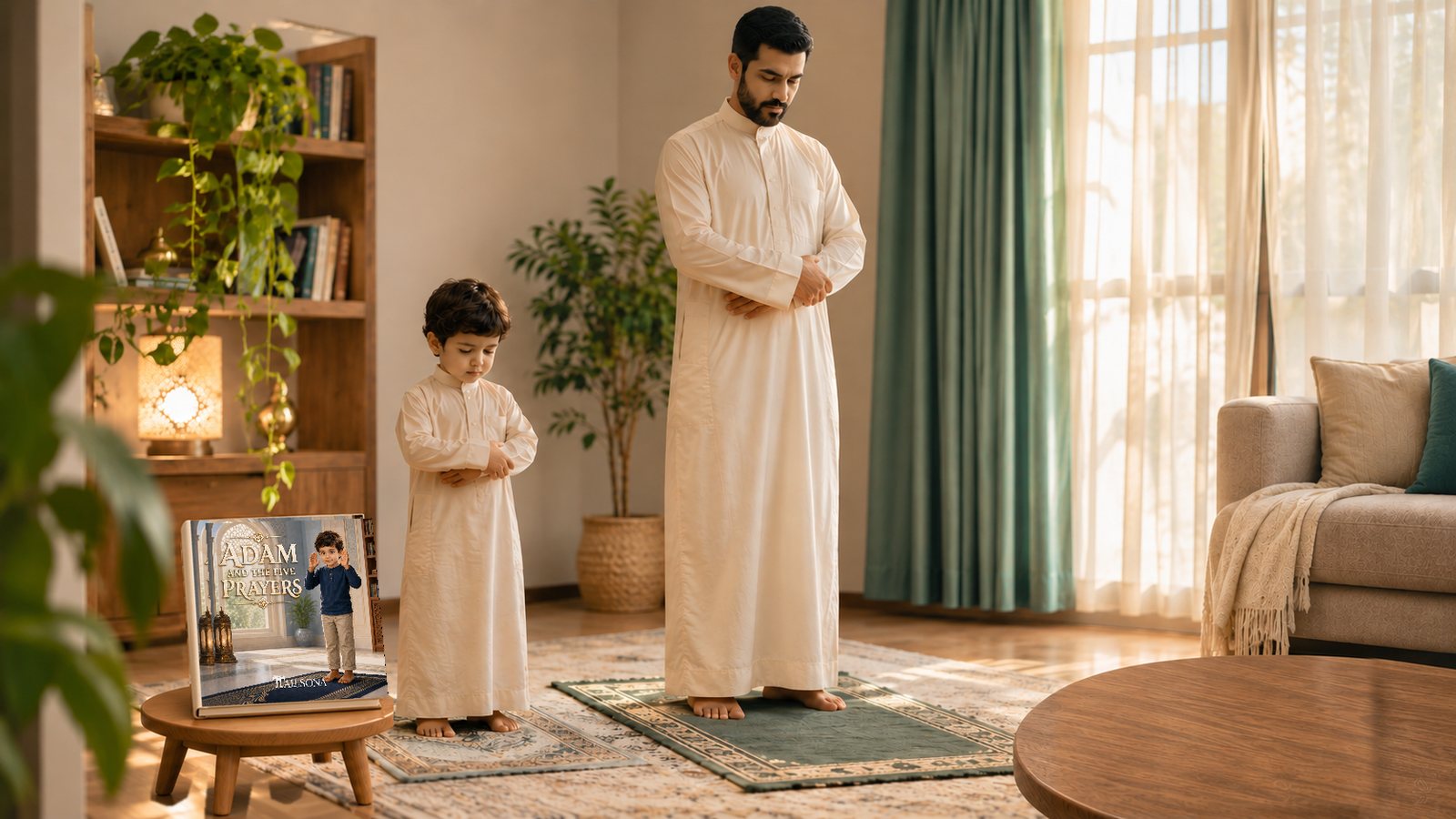
Children learn salah the way they learn most things: first by watching someone they love, then by copying, and finally by making it their own. The Prophet ﷺ said: "Command your children to pray when they are seven years old" (Sunan Abi Dawud 495). Seven is the age to begin asking, but the love of prayer starts much earlier, on a parent's prayer mat, with small hands copying big movements. This guide follows that path, step by step.
Children were always close to the prayer
The Prophet ﷺ did not keep children away from salah. He once prayed while carrying his granddaughter Umamah: when he stood he carried her, and when he prostrated he put her down (Sahih al-Bukhari 516). The message for parents is gentle and clear: children belong near the prayer, even before they can pray properly themselves.
Ages 2 to 4: watching and copying
- Pray where they can see you. A toddler who watches you pray every day learns that prayer is normal and calm.
- Give them a small prayer mat. Let them stand beside you and copy. Do not correct their movements; joining in is the whole lesson.
- Use the words of the day. "It is time for Maghrib", "Allahu akbar", "Bismillah". Familiar words prepare them for later.
- Read simple faith stories. Books such as My Day Begins with Bismillah (also for boys, ages 4 to 6) show remembering Allah as part of an ordinary day.
Ages 5 to 6: learning the steps
- Teach wudu together. Same order, every time, naming each step: hands, mouth, nose, face, arms, head and ears, feet. A picture chart by the sink helps.
- Learn al-Fatiha in small pieces. One verse a week is plenty. Recite it together in the car or before sleep.
- Pray one prayer together each day. Choose the one that fits your family, often Maghrib, and keep it short and warm.
- Explain the five prayers as the shape of the day. Fajr at dawn, Dhuhr at midday, 'Asr in the afternoon, Maghrib at sunset, 'Isha at night. Children like knowing where they are in the day.
A Day of Prayer and Peace (ages 5 to 7) is written for this stage: a child moves through the day, prayer by prayer, and discovers the calm each one brings.
Ages 7 to 9: building the habit
- Begin the five daily prayers. This is the age the Prophet ﷺ named. Start by aiming for consistency, not perfection.
- Make prayer times visible. A simple chart on the fridge, a prayer-time app on a parent's phone, or a small clock in their room.
- Pray together whenever you can. Children who pray beside a parent keep the habit far more easily than children who are sent to pray alone.
- Praise effort, not only results. "I saw you stop your game for 'Asr" means more than a sticker.
- Keep it kind. The aim is a child who loves to pray. Harshness may bring obedience for a while, but warmth brings love that lasts.
Stories help children see prayer as something they choose. In The Five Prayers (ages 7 to 12), a boy on a nature-trail challenge pauses for each prayer, even when the clock is ticking and a borrowed compass has cracked. Five Prayers for girls (ages 6 to 8) follows a girl on moving day, as she rolls out her prayer rug on the bare floor of an emptying house and learns that her prayer comes with her wherever she goes. With your child as the hero, the choice on the page becomes their choice.
Ages 10 and up: owning their prayer
By ten, many children can pray on their own and on time. Give them more responsibility: let them call the family to prayer, lead a short prayer with younger siblings, or track their own prayers in a notebook. Talk about the meaning of what they recite, so their prayer grows from movement into conversation with Allah.
When it is hard
- Missed prayers: help them make it up calmly and move on. Guilt rarely builds habits.
- Busy days: show them that prayer can be done anywhere clean, even in a park or a shopping centre prayer room.
- Resistance: ask what makes it hard. Sometimes the answer is simple, like being afraid of getting the words wrong.
Key takeaways
- Love of prayer begins long before seven, by watching and copying a parent.
- Teach wudu and al-Fatiha in small, repeated steps.
- From seven, aim for the five daily prayers with patience and warmth.
- Praying together builds the habit faster than sending a child alone.
- Stories in which a child chooses to pray help children make prayer their own.
Sources
- Sunan Abi Dawud 495 (children and prayer at seven). https://sunnah.com/abudawud:495
- Sahih al-Bukhari 516 (the Prophet ﷺ praying while carrying Umamah). https://sunnah.com/bukhari:516
Want your child to be the hero of a story about prayer? Upload one photo and view a free preview before you decide.
FAQ
At what age should a child start praying?
The Prophet ﷺ instructed that children be told to pray at seven (Sunan Abi Dawud 495). Before that, many children enjoy standing beside a parent and copying the movements, which is a natural first step.
How do I teach wudu to a child?
Do it together, slowly, in the same order every time, and name each step as you go. A simple picture chart near the sink helps younger children remember.
What if my child does not want to pray?
Keep it calm and short, pray together rather than sending them alone, and praise effort. Stories in which a child their age chooses to pray can help them see it as their own.
Which Talesona stories are about prayer?
The Five Prayers (ages 7 to 12), Five Prayers for girls (ages 6 to 8) and A Day of Prayer and Peace (ages 5 to 7) follow a child through the prayers of the day.
Can the story be in Arabic?
Many Talesona stories are available in Arabic as well as English. You can choose the language when you personalize the book.