
Reading Arabic with English-Speaking Children at Home
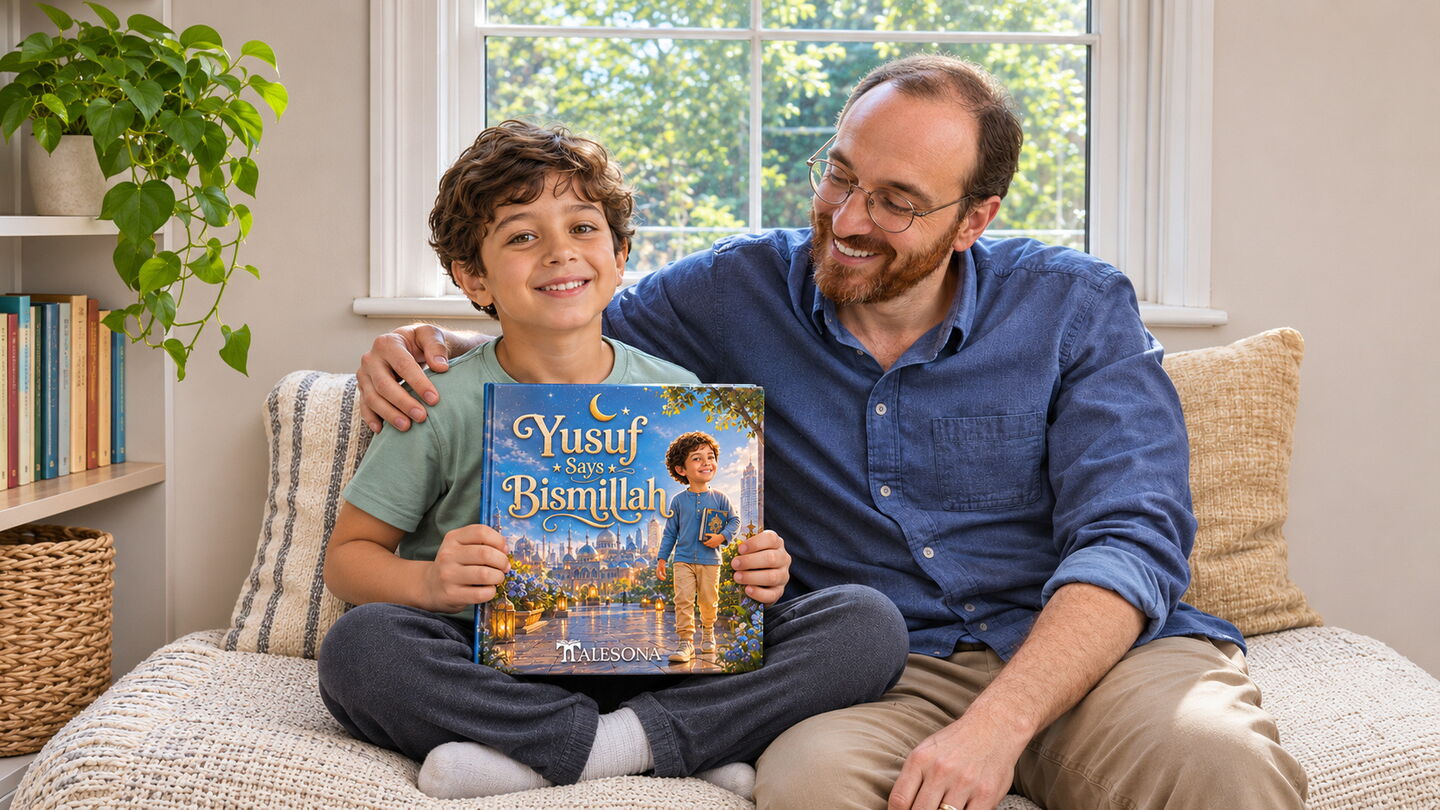
Read Arabic with an English-speaking child by choosing an understandable story, explaining unfamiliar words and accepting answers in either language. Begin with a manageable passage and a conversation, rather than asking for a translation of every sentence. The first goal is for Arabic to carry meaning between you and your child.
Choose the skill you are practising
“Learning Arabic” can mean several different things. A child might understand a grandparent's spoken Arabic, recognise some letters, read a short sentence or be learning to recite Quran. These are related experiences, but they are not interchangeable. Decide what you want from this particular book: enjoying a story, hearing new vocabulary or practising independent reading.
A child attending school in English may have rich ideas but limited Arabic reading experience. Choose an interesting subject with accessible language rather than a babyish book simply because the sentences are short. Ask what they would like to read about. Animals, school, space and family life can all give you something concrete to talk about.
Understand the distance between home Arabic and book Arabic
The Arabic your family speaks may differ from the Modern Standard Arabic in a story. Tell your child that families and books sometimes use different words for the same thing. You can explain a sentence in the language you speak comfortably, then return to one useful word from the printed text. There is no need to pretend the two forms sound identical.
For example, point to an illustration of a window, say the word used in the book and connect it with the word your child already hears at home. Use the object in the room if that helps. A concrete connection is more useful than a long explanation of grammar during a story.
Check a book before you commit to it
- Read a sample: can you explain the main event naturally without stopping at every word?
- Check the script: is the print clear, and are vowel marks suitable for the child's current reading stage?
- Look at the vocabulary: does the book offer words your child can use beyond this reading session?
- Check the interest level: will the subject still appeal when the language takes effort?
- Confirm the language: do not assume that an English product title means an Arabic version is available.
A bilingual edition can help some families follow the meaning, but it is not a requirement. A picture book you can discuss confidently may work better than a complicated bilingual text. Where a preview is available, inspect actual pages rather than judging the reading level from the cover alone.
Try a three-pass conversation
First, establish the story
Look at the cover and ask what might happen. You can discuss this in English, Arabic or both. Introduce the setting and one or two useful words. Keep the meaning clear enough that your child wants to discover the next event. This opening is a conversation, not a test of words they have never encountered.
Next, read a short passage
Read smoothly, pointing to a word only when that supports your purpose. If the child loses the plot, briefly explain what happened and continue. Avoid translating every phrase automatically. Choose the important language: perhaps a repeated action, a feeling or something the character needs. Invite participation without insisting that the child repeat every line after you.
Then, use the meaning
After the passage, ask a real question: “Why did she go back?” or “Which thing would you take?” Accept the idea even if it arrives in English. You might answer in simple Arabic and naturally include the useful word again. Later, connect it with something you do together, such as opening a door or choosing a snack.
When your child answers in English
An English answer does not erase the Arabic your child has heard. Respond to what they said and offer an Arabic model without demanding an immediate correction. For example, if they say that a character is worried, you can acknowledge the feeling in Arabic and ask what might help. Keep the exchange moving.
Many children who grow up with two languages mix them while they talk, and that is not a reason to stop reading in Arabic. Every child is different, so watch your own child rather than following a fixed rule. Notice whether your child understands the main event and feels able to participate, then adjust the language load. Comparison with a cousin who lives in an Arabic-speaking environment rarely helps you choose the next useful step.
Give Arabic a place beyond the page
Choose one detail from the story to use elsewhere. A character buys fruit, so you name fruit while shopping. A family prepares a bag, so your child helps name what goes into theirs. You are creating another reason to use language, rather than setting a separate vocabulary examination.
- Ask a relative to listen while the child retells one event in any mix of languages.
- Borrow Arabic books through the library or ask about community collections.
- Arrange a playdate where Arabic is available naturally alongside shared interests.
- Let an older child choose an Arabic topic connected with a hobby.
In the UK, US, Canada and Australia, access to Arabic books and community activities varies widely. Ask local libraries and schools what they can actually offer. A small, usable collection at home can still give you a starting point while you explore other options.
Make room for parents who are learning too
If your spoken Arabic is stronger than your reading, prepare a passage in advance or read alongside a confident adult. You can tell your child honestly that you are checking a word. If you do not speak Arabic, learn a few meaningful words together and seek a suitable teacher for systematic reading instruction. You do not need to act as an expert to show interest in the language.
Keep Quran learning distinct from an ordinary story session. Quran recitation has its own teaching needs and deserves appropriate guidance. A child's enjoyment of Arabic stories is valuable without treating a commercial storybook as a substitute for that instruction.
Choosing a personal story thoughtfully
If familiar daily themes interest your child, look at Talesona's My Day Begins with Bismillah for girls and My Day with Bismillah for boys, listed for ages four to six. Check the available language and preview before selecting a version; some Talesona stories have more than one language. The child's name and picture can be included, and printed or PDF options are available. Choose for language and interest rather than assuming personalization guarantees reading progress.
Measure a useful next step
Progress might be recognising a repeated word, asking for the same story or explaining an event more clearly. Keep a note of what helped and choose the next book accordingly. If a session repeatedly feels frustrating, shorten the passage or make the language easier while keeping the subject interesting. Arabic can remain part of family conversation even while independent reading develops gradually.
FAQ
Should I translate every Arabic sentence?
Not automatically. Explain enough to keep the story meaningful, then return to a few useful words.
Can my child answer in English?
Yes. Respond to the meaning and offer a natural Arabic model without turning every answer into a correction.
Should stories use our dialect or Modern Standard Arabic?
Both can have a place. Explain the connection between familiar home words and the words used in the book.
Do we need bilingual books?
No. They can help, but an accessible Arabic picture book that you can discuss confidently is also useful.
Does reading an Arabic story replace Quran lessons?
No. Enjoying stories and learning Quran recitation have different aims and teaching needs.